Showing posts with label acute care surgery. Show all posts

Tuesday, August 25, 2015

In 22% of kids with appendicitis, antibiotics do not prevent perforation


Those clambering aboard the "antibiotics for appendicitis" bandwagon should read this interesting paper about appendicitis in children.

A group of emergency physicians from Maimonides Medical Center in Brooklyn, New York found that "Increasing in-hospital time delay from ED presentation to OR appendectomy is associated with increased risk for developing appendicitis perforation in children who present with CT-documented uncomplicated appendicitis."

Children with simple appendicitis who were taken to the operating room longer than 9 hours from the time of ED presentation were much more likely to develop a perforation than those who had surgery in less than 9 hours.

During the four years of the study, 404 consecutive children ≤ 18 years of age had a CT scan diagnosis of acute appendicitis; 156 (38.6%) had evidence of perforation at the time of presentation and were not included in the final analysis.

Wednesday, September 12, 2012

Does the timing of appendectomy influence the wound infection rate?


“Yes,” says a large review of a single institution’s experience with appendectomy for acute appendicitis.

The study looked at over 4500 patients who underwent appendectomies over the 8-year period between 2003 and 2011. The main findings of the study were that patients who developed surgical site infection (SSI) had a significantly longer delay in going to the operating room. Time to appendectomy was defined as the time the patients were admitted to the surgery service until they reached the operating room (OR).

Patients who developed infections were taken to the OR after a mean of 14 1/2 hours compared to 11 hours and 45 minutes for those who did not, which was a statistically significant difference, p = 0.013.

The delay in taking patients to the operating room did not lead to more perforations. However, the rate of perforation in this series was rather high at 23%.

The abstract concluded, "prompt surgical intervention is warranted to avoid additional morbidity in this population."

Since this paper supports my bias about performing appendectomies as soon as the diagnosis is made (as I have previously blogged), I was hoping that its findings would be valid. Unfortunately, that is not the case. The paper is not as convincing as the abstract.

The authors state that surgeons and operating room personnel are in the hospital 24 hours a day. It is not clear why patients’ operations were delayed so long. There is no mention of whether the patients received antibiotics while they were waiting. If more patients who did not suffer SSI's had received antibiotics, the paper’s results could be misleading. If you look at the mean difference between times to the operating room for non-infected versus the infected patients, you will note that it is a little less than 3 hours, which really is not that long.

Another issue is that only 41% of the patients underwent laparoscopic appendectomy. In my practice and that of most other surgeons, 90%-95% of patients with appendicitis are operated on via the laparoscopic approach. Laparoscopic appendectomy is known to have a lower wound infection rate than open.

The mean hospital length of stay for the non-perforated patients was 3.4 days, highlighting the outdated nature of the information. Most patients with non-perforated appendicitis are discharged within 24 hours of surgery in 2012.

However the most important problem with the paper has to do with the key factor that the paper emphasized; that is time. Not only was the duration of the patients’ symptoms prior to arrival at the hospital unknown, the authors also did not account for the length of time that the patients spent in the emergency department. If diagnostic CT scans, which are done about 90% of the time for appendicitis, were performed, the patients probably spent at least 6 hours in the ED.

It does not stand to reason that a less than 3-hour average difference in taking patients to the operating room when the preop duration of symptoms is unknown could possibly be significant. And 11 hours and 45 minutes to get a patient to the OR does not define “prompt” for me.

Bottom line: As I have said before (here and here), you have to read the entire paper and not just the abstract.

Thursday, September 8, 2011

Night Call

What do you think about these two posts that mention diametrically opposite perspectives on night call that were published within the last few days?

On September 7, 2011, NPR posted a story about a trauma and burn surgeon named James Jeng, who was on duty at Washington Hospital Center on September 11, 2001. He cared for a number of seriously burned victims from the Pentagon. In discussing the intensity of the post-burn care of these patients, he said this:

I had fallen into an automatic rhythm of 36 hours on, 12 off in-house duty. Every other night, then, I would get home to be with my family.

This, of course, is against all the new rules but somehow Dr. Jeng and the patients got through it despite the potential detrimental effects of “decision fatigue” and sleep deprivation.

On September 3, 2011, the following from M. Schoen, MD appeared on Sermo, a website devoted to physician issues:

In my group most of the new docs joining in the past couple of years are refusing to take internal medicine night call. These are both docs who are subspecialists (but who also practice medicine) and docs who are only internists. Meanwhile the bulk of the night call is being taken by the older docs (of whom 7 of the 25 or so docs are over 60). The group refuses to consider what will happen in the future when there will be no one to do night call. Is it common for groups to allow this? And what will happen down the road? 

This has attracted 286 comments with most of them deploring the situation.

So where is this all going? I think I know, and it’s not a good place.

Monday, June 13, 2011

Legislators Gone Wild: A Bill Requiring All Operations To Be Recorded

Last month the New York State legislature threatened to pass a law banning doctors from wearing neckties. This was based on some research that showed that bacteria can be found on ties. No link to any disease caused by a tie has been reported. It appears that the proposal did not become law.

Now comes news that lawmakers in Massachusetts are considering a bill that would give patients the right to have their operations videotaped if they pay for it. The story claims that this could be done without a videographer being present in the operating room. And, get this, if a hospital refused to allow the videotaping, it could be fined $10,000.

Who thinks up this stuff? Can you think of any problems with this plan? I can.

It would not be difficult to record laparoscopic and arthroscopic procedures since they are already being performed using video equipment. There would be added expense because many hospitals have not purchased the necessary DVD recorders. However, open surgical procedures are not routinely videotaped and video equipment is not readily available to do so. Even when experienced videographers are present, it can be difficult to see what the surgeon is seeing.

Who would pay for the installation of video equipment in every operating room of every hospital in Massachusetts?

A comment on the article points out that the taping of all surgical procedures would be complicated, distracting and might cause surgeons to perform differently [possibly detrimentally] when they know they are being watched.

Sometimes things happen during a case that might seem untoward to a lay person. For example, due to magnification by the laparoscope, a few milliliters of blood can look like a hemorrhage. Occasionally, gallstones or bile may be spilled. Although this rarely results in complications, it could be construed as a “mistake” by a devious [is there any other type?] lawyer.

This would of course be a boon for plaintiffs’ attorneys. Wait, aren’t most legislators also attorneys? I wonder if there is a connection?

In summary, this plan is misguided, ill-conceived and stupid. Since it is being discussed in Massachusetts, it just might pass.

Monday, May 2, 2011

Coming Soon to a Neighborhood near You: A Shortage of General Surgeons

There is much hand-wringing about the shortage of primary care physicians. But primary care not the only specialty with deficits. In a few years, all surgical specialties will experience significant decreases in availability. Here is what will be happening with general surgery.

Demand-Side Facts:

The current population of the United States is about 311 million people. Estimates are that by 2020, it will rise to over 340 million.

As baby boomers age, the increase in the population of the elderly will result in more need for general surgeons.

There are already many rural areas that are underserved by general surgeons.

Supply-Side Facts:

The number of general surgeons needed to adequately serve the population is estimated to be at least 7 per 100,000 people.

Currently there are about 18,000 active general surgeons in the US or 5.8 per 100,000 people.

The ratio of general surgeons per 100,000 population has dropped by 26% in the last 25 years.

Medical schools are expanding class sizes and a few new schools are opening but it will take several years for the impact of these changes to be felt.

Residency programs produce about 1050 new general surgeons per year, a rate that has been level for almost 20 years.

The prospects for increasing the number of surgeons being trained are limited. A recent paper in the journal Academic Medicine showed that even if all of the current 246 general surgery training programs expanded as much as they possibly could, the best-case scenario would be an increase to about 1500 new surgeons per year. The cost of funding this increase is estimated at several billion dollars, which have not been allocated. Even if the expansion took place by 2015, it would take 5 years (the length of general surgery residency training) before the extra new surgeons would be available.

At least 30% to 50% of graduating general surgeons take fellowships and ultimately narrow the scope of their practices. These surgeons do not perform all of the procedures that the average general surgeon does.

Almost 50% of medical school graduates are women and up to 40% of surgical residents are women as well. Here is “the elephant in the room” that no one wants to talk about. Although some surveys suggest that women do as many cases as their male counterparts, a recent study presented at the American Surgical Association showed the facts. Information submitted by nearly 5000 general surgeons applying for recertification by the American Board of Surgery during the years 2007-2009 shows that male general surgeons perform an average of 500 cases per year compared to female general surgeons, who do 375 cases per year. And the case mix of women surgeons is skewed with “far more” breast procedures and fewer abdominal and GI cases being done compared to male surgeons.

Recent papers have noted the increasing problem of “burnout” among surgeons. One paper from 2009 reported that 40% of some 7900 respondents to a survey of members of the American College of Surgeons considered themselves “burned out” and 30% had symptoms of depression. This will lead to attrition and/or earlier retirement.

Bottom line. There is already a shortage of general surgeons. The population of the US is growing and the supply of general surgeons is not. It will take money and time to rectify the problem. No one is doing anything about this.

Monday, April 18, 2011

Sexism and Surgery: A Surgical Leader Falters


A well-known academic surgeon was “hoist with his own petard” via an unusual commentary he wrote in his capacity as editor of Surgery News, the official newspaper of the American College of Surgeons (ACS). Lazar Greenfield, Emeritus Professor of Surgery at the University of Michigan and inventor of the Greenfield filter, a device used for prevention of pulmonary embolus (clots traveling to the lungs), was forced to resign his position as editor and also as president-elect of the ACS.

The entire issue of the newspaper containing the piece was retracted by the ACS but it can be read here. The editorial, an apparent attempt at Valentine’s Day humor, suggested that women experienced lighter moods after unprotected sex with men and extolled the virtues of semen as a substitute for chocolate as a Valentine’s Day gift.

Rather predictably, the editorial was not viewed favorably by a number of women. Personally, I thought it was inappropriate for an official publication of the largest surgical organization in the country, and worse, it wasn’t funny. In fact, I tweeted the following several weeks before the feces hit the fan and the story was finally noticed by the New York Times.

There have been a slew of comments ranging from Greenfield is the worst sexist since Andrew Dice Clay to women are too sensitive. So now a famous surgeon, known to have encouraged and mentored women entering surgery, is disgraced. And the ACS loses both ways because it took the leaders of the society way too long to resolve the problem and they lost a formerly respected leader anyway.

Bottom line. It’s 2011, and this sort of thing just doesn’t fly any more. I feel sorry for Dr. Greenfield, whom I’ve never met. He seems like a nice guy who made a mistake which proved fatal to an otherwise illustrious career. Too bad.

Obesity: New Products and Old Problems

You might be interested in the response of equipment manufacturers to the increase in the size of obese patients. Below you can see a photo of a wide-body wheelchair and a super wide-body bedside commode.

You will note that the bedside commode has a normal sized bucket but the seat is extra wide to accommodate the girth of morbidly obese patients.

Something probably not appreciated by most people is that a morbidly obese person’s body actually contains a normal sized individual surround by a large layer of adipose tissue.

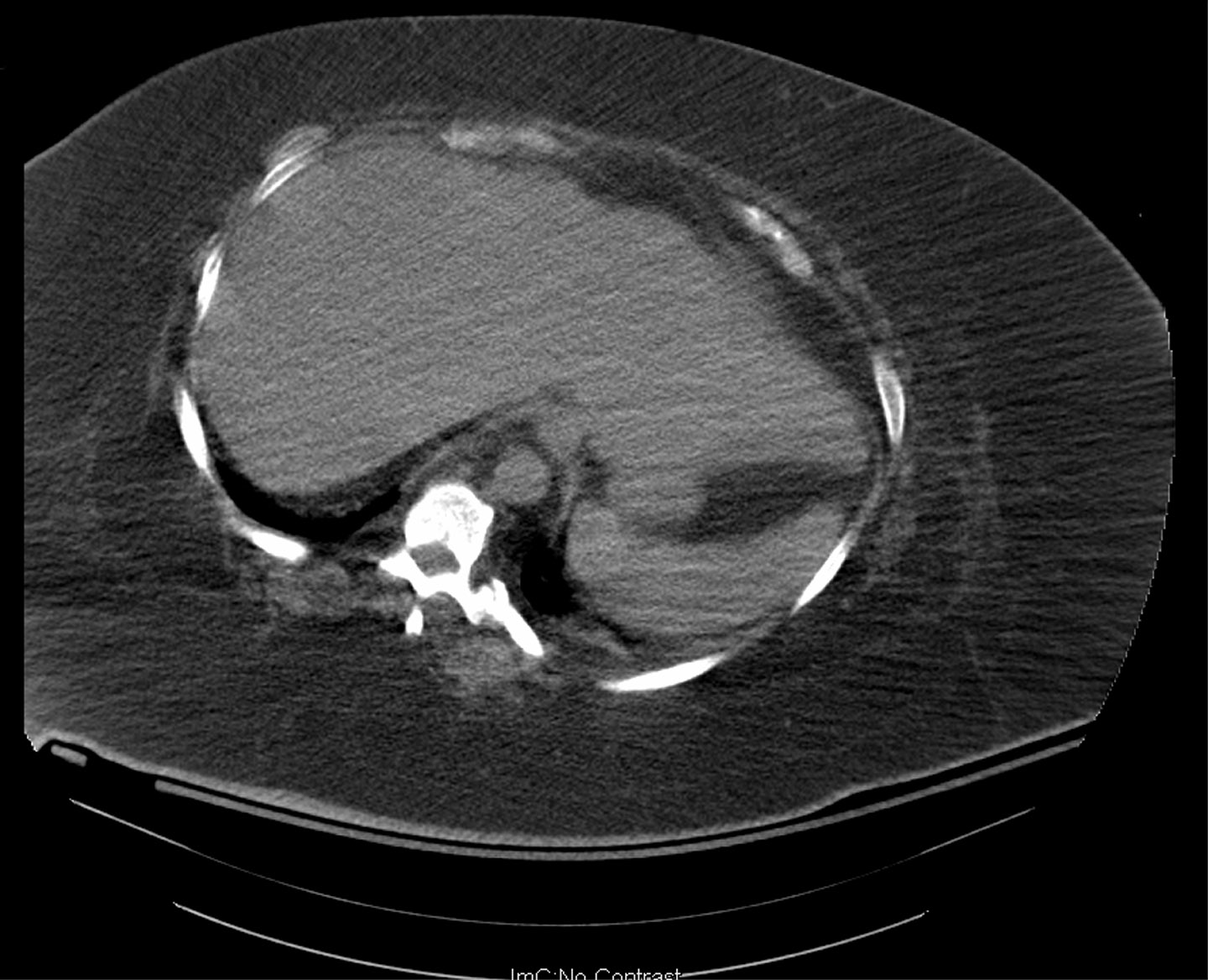
Below is an abdominal CT scan which illustrates the point.

You can see that the organs are encased in body fat which extends to the limits (and beyond) of the CT scan table. The picture is grainy because the x-rays are partially absorbed by the thick fatty layer. This makes the interpretation of the images much more difficult.  So not only is the diagnosis of abdominal problems hindered by the fat, you can imagine how hard surgery must be. Or maybe you can’t. Take my word for it, it’s hard.

Recovery is also an issue due to impaired wound healing, increased incidence of infections, problems moving the patient, difficult intravenous access and many more.

Remember this when you order that second Big Mac with supersized fries.

Thursday, March 31, 2011

Too Many Diagnostic Tests? Says Who?

A recent Time magazine column attempted to analyze the reasons for the increased use of diagnostic imaging. The authors brought up many of the standard reasons including the need to practice defensive medicine, fallout from morbidity and mortality conferences, greed, etc. They say that doctors are no longer taught how to tell when patients need diagnostic tests and when they don’t. They make the following claim: “… the real value of so much testing has been widely questioned in scientific literature: imaging rates are going up, but doctors are not diagnosing (or necessarily misdiagnosing) more diseases.”

Respected medical blogger Kevin Pho (KevinMD) agreed with the Time article. Dr. Pho said that students are “…are spoiled by the easy access to the latest in imaging equipment and medical technology, and have become less dependent on physical exam skills previously relied upon in the past."

But as I have blogged previously, patients seem to want accurate diagnoses. Thus far, they are not moved by the theoretical increased risk of cancer secondary to radiation which may occur in the distant future. They want to know if they have appendicitis now and before they consent to surgery.

Contrary to what the Time magazine piece stated, there is some evidence that imaging does make the diagnosis of some diseases more accurate than history and physical examination.

In the April 2011 issue of the American Journal of Surgery, researchers from Howard University and the University of California, San Diego reported a 10-year review of negative appendectomy rates in the U.S. Using data from the National Inpatient Sample, they found that for nearly 500,000 appendectomies performed for presumed appendicitis from 1998 through 2007, the rate of removal of a normal appendix during surgery fell from 14.7% to 8.5%. This represents a 40% decline in the rate of negative appendectomy. The rate of perforated appendicitis also fell during that time period, indicating that the fall in negative appendectomy rates did not result in more occurrences of perforation.

Although the study was not designed to establish a link between the increased use of imaging studies and the falling rate of negative appendectomy, there are many papers supporting this conclusion such as one from Brigham and Women’s Hospital in Boston which showed a fall in the negative appendectomy rate from 23% to 1.7% over and 18-year period during which the rate of CT scan use went from 1% to 97.5%. Surgeons from Cornell reported similar results with the rate of CT scanning for appendicitis rising from 32% to 95% and the negative appendectomy rate falling from 16% to 7.65% from the late 1990s to the mid-part of the 21st century.

Having published a paper a few years ago which decried the use of CT scans in the diagnosis of appendicitis, I have completely reversed that opinion based on my personal series of over 125 appendectomies over the last two years with a negative appendectomy rate of just under 5%.

I never thought I would say this. The fact is CT scan is very accurate at diagnosing appendicitis. CT is better than I am and likely better than any human. It isn’t going to go away. It isn’t going to be replaced by ultrasound [not as readily available, not as accurate, not as easy to read] or MRI [not as readily available, not nearly as well-documented in the diagnosis of appendicitis, more expensive, not as easy to read]. So get over it.

Friday, March 18, 2011

General Surgery, Acute Care Surgery and the Surgical Hospitalist

As medicine adapts to the 21st century, new specialties arise. General surgery is seeing two new fields emerge. One is “Acute Care Surgery,” which encompasses three facets of general surgery—emergency surgery, critical care and trauma care. The other is the concept of a surgical hospitalist. That is, a surgeon works only in a hospital and has no office or private practice. The idea is similar to the medical hospitalist movement, which has existed for several years now.

The changes in surgery are in response to a number of forces. General surgeons are becoming increasingly more focused, especially in areas such as advanced laparoscopic surgery, bariatric (obesity) surgery, endovascular surgery and breast surgery. With these areas of concentration comes decreasing interest in taking emergency call, which interferes with elective cases and office practice. In addition, a concentration on something like breast surgery leads to diminished experience and skills in treating gunshot wound and bowel obstructions.

Acute Care Surgery arose in response to the need for emergency call coverage as well as the desire of trauma surgeons to increase their operative case load as trauma care itself becomes less involved with operative procedures. In many trauma centers, the percentage of blunt trauma cases is well over 90% and a large majority of these patients are treated without surgery. Many academic medical centers have established acute care surgery services which are staffed mostly by trauma/critical care surgeons.

A surgical hospitalist usually does acute care surgery but does not see outpatients unless they have emergencies. I have been working as a surgical hospitalist for the past two years. I am on duty for two five-day weekends per month. During that time I cover for the general surgeons in the area, make rounds on their inpatients, handle phone calls from their private practice patients, see consults from the emergency department and inpatient medical services and perform any emergency procedures that are needed. At the end of my tour of duty, I sign out my patients to one of the general surgeons. The positive features of my job are as follows: there is no office practice or overhead; it’s a salaried position; I have 20 days/month off; when I am not on duty, I am completely without responsibilities. The downsides include loss of continuity, having to pick up many patients often with complex problems all at once and occasionally having to leave a very sick patient for someone else to take care of. I am the sole surgical hospitalist at my institution, but there can also be groups which can cover inpatients and emergencies.

The surgical hospitalist model is a far cry from anything I would have dreamed of when I started in surgery years ago. But it is the wave of the future. Other specialties such as orthopedic surgery are getting on the bandwagon. The field will see much growth in the next few years as graduating residents, who are used to shift work, will see a surgical hospitalist career as a logical extension of their experience as residents.

Wednesday, August 11, 2010

Appendicitis: Diagnosis, CT Scans and Reality

UPDATED 4/11/2013

ADDENDUM: Dear Readers,

I am grateful that this post has been read by so many people and that several of you have written for advice about your abdominal pain. While I would sincerely like to help you, it occurs to me that answering your questions has taken on a predictable scenario. You ask a complex question. I respond that not having examined or spoken to you nor having seen your CT/ultrasound reports or images, I cannot give you medical advice.

From now on, I will not be able to answer specific questions via this blog or by email. Please read through the numerous questions and answers and you are very likely to find a situation like yours that has been asked and answered.

Best wishes to all,

Skeptical Scalpel

Yesterday, medical writer and pediatrician Perri Klass wrote in the New York Times about evolving issues regarding the diagnosis of appendicitis in children, which are also applicable to adults. There is well-documented concern regarding the excessive radiation exposure associated with CT scans. For example, a recent paper reported that a single abdominal CT scan with contrast delivers a radiation dose equal to undergoing more than 200 regular chest x-rays. The implications of this large dose of radiation are that an increase in cancer rates may arise in the future, especially if the CT scan is performed in a child.

The problem is how does one curtail the use of CT scans for the diagnosis of appendicitis when the test has become extremely accurate? Although Klass states that a normal appendix can be expected in 10-20% of appendectomies, those numbers are no longer valid. Even in a non-teaching community hospital, the rate of removal of a normal appendix during emergency surgery for the diagnosis of appendicitis should be well below 10%. She also repeats a commonly held misconception that a high rate of removal of normal appendices results in a lower rate of perforated appendicitis, which is not true. Some authors even believe that perforated appendicitis is a different disease than simple acute appendicitis.

I do not see the rate of CT scans for appendicitis decreasing because of three major factors.

1. Patients [or their parents] have come to expect accuracy in diagnosis. On more than one occasion, I have had the experience of seeing a teenage boy with classical symptoms and signs of appendicitis where the emergency physician has called me and said he did not think a CT scan was necessary. I examined the child and agreed. After I explained everything to the mother, she said, “What about the CT scan?” It then becomes hard to go ahead without the scan because in the unlikely event the boy did not have appendicitis, the mother would have accused me of performing unnecessary surgery. In fact, of my last 80 appendectomies, I have operated without a CT scan only four times. My rate of removal of a normal appendix is 6%. This is in a non-teaching community hospital with out-sourced CT scan readings at night.

2. Klass mentions the use of ultrasound as a substitute for CT scan. Although ultrasound does not involve radiation and is accurate according to some studies, the reality is that it is not always readily available at night [when most people with abdominal pain show up] in many community hospitals. The test is useless when the appendix is not identified, a situation that occurs frequently outside of academia. And unlike CT scan, ultrasound is far less likely to reveal an alternative diagnosis when the appendix is normal.

3. In a non-teaching hospital where there are no residents, it is very difficult to have every patient with a suspicion of appendicitis seen by a surgeon. When the emergency physician calls and says she has a patient with a positive CT scan for appendicitis, the diagnosis is correct more than 95% of the time. They rarely call when the CT scan is negative. Some scans are equivocal and the surgeon does have to see the patient and make a clinical decision. Regarding patients with positive CT scans for appendicitis, it pains me to say this but the history and physical exam are probably no longer relevant. This is particularly true now that all patients with abdominal pain receive narcotics within a few minutes of arrival to most EDs. It takes cojones to not go ahead with surgery when the CT scan is read as positive for appendicitis. I have done it once [successfully] in the last 19 months. Of course, I look at all the CT scans myself to usually confirm or rarely question the reading.

It comes down to this. Do you want an accurate diagnosis for yourself or your child with the possible increased risk of cancer years later or would you accept a higher rate of normal appendix removal? I believe that the general public would opt for the former.